Daikin Technical Mobile App
Context
I led the redesign of a mobile application used by Daikin HVAC technicians working in the field. The tool supports technicians diagnosing and servicing equipment in environments where time, connectivity, and attention are limited. Work often happens in physically constrained conditions—on rooftops, in crawl spaces, or in extreme temperatures—where reference materials need to be fast, reliable, and usable offline.
Research
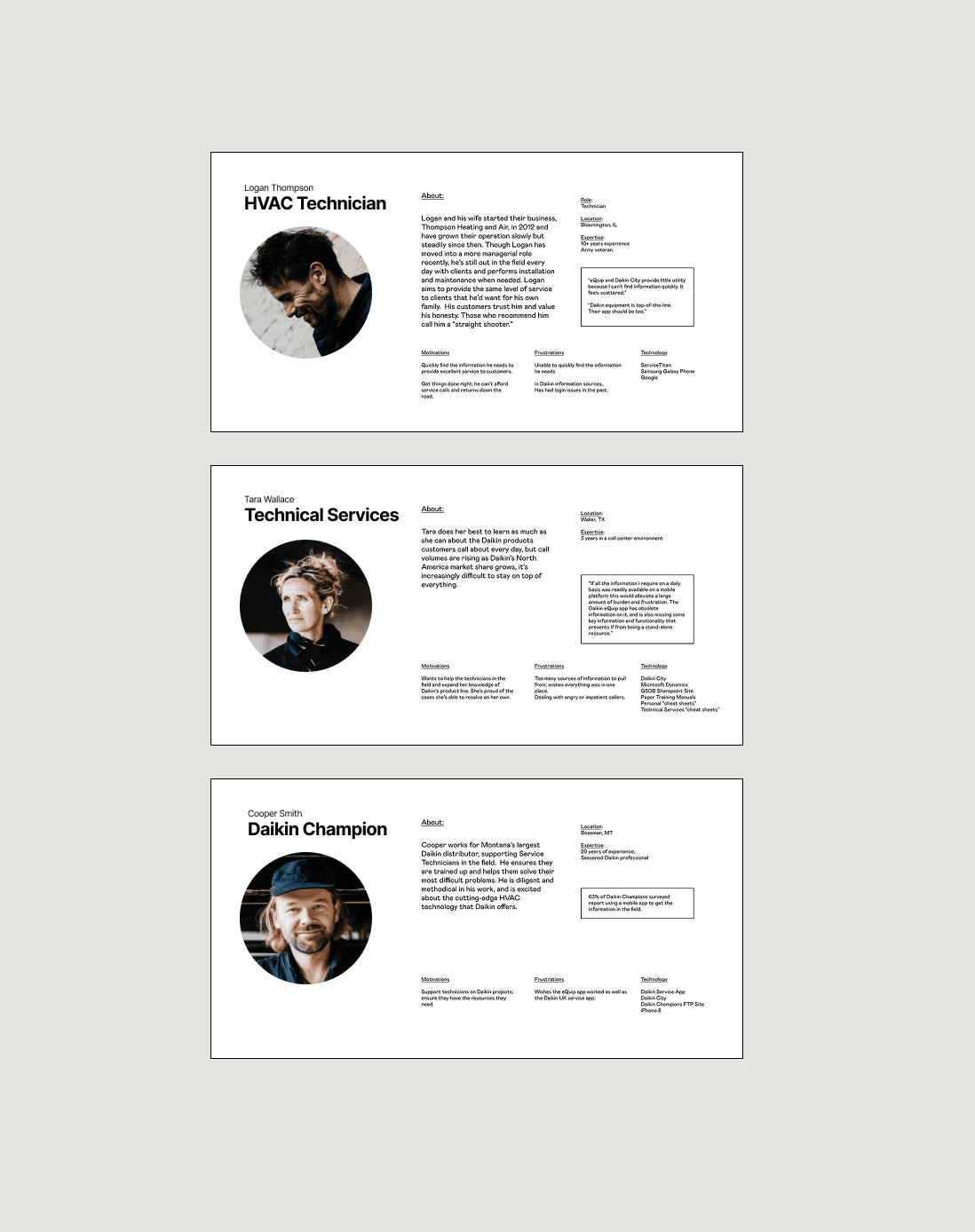
Research was conducted during Daikin’s annual technician convention and combined live usability testing with structured group exercises involving approximately 200 technicians across two concurrent sessions. Because we had a single hour with technicians arriving from across the country, the sessions were designed to surface patterns quickly and decisively.
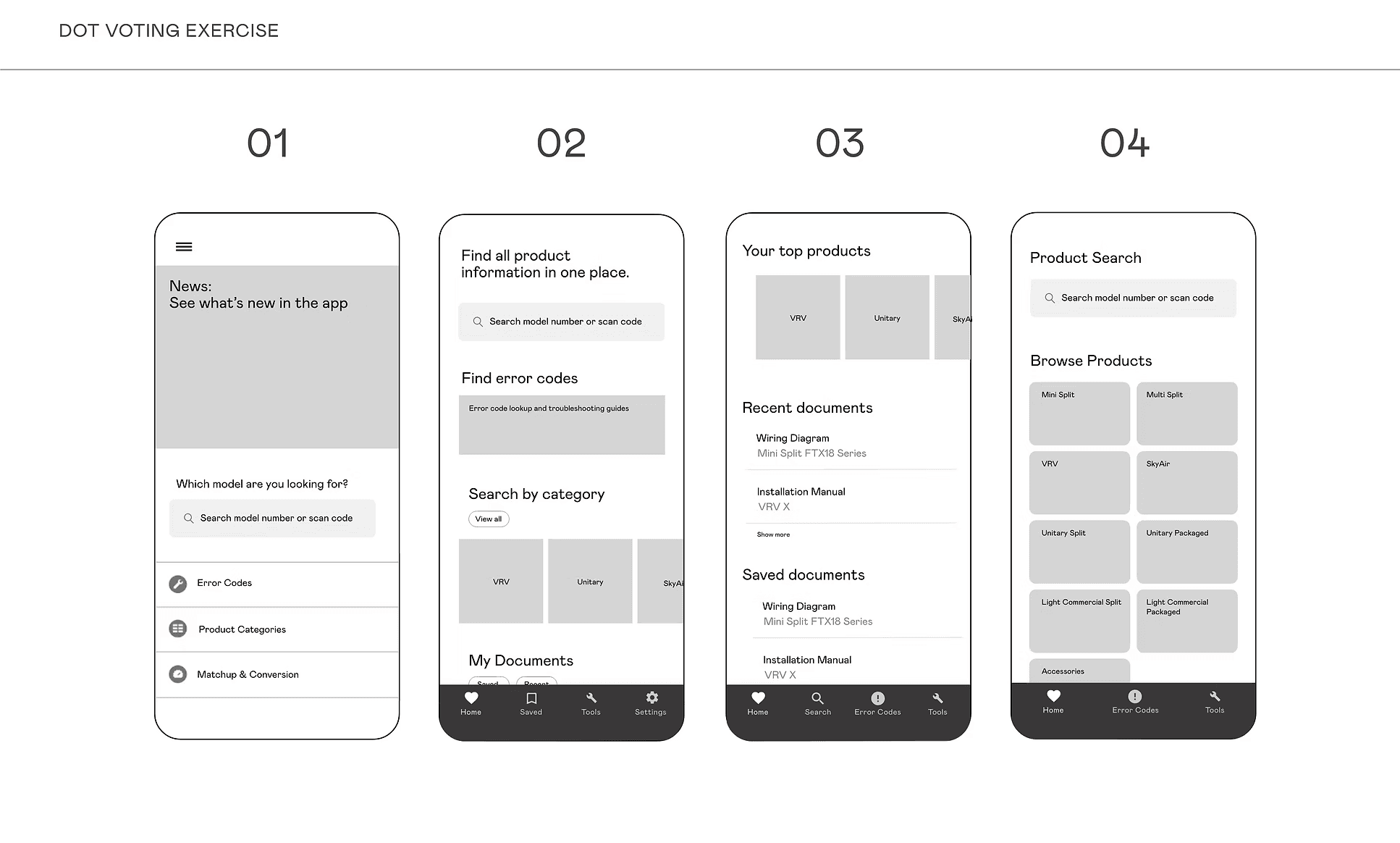
Using printed artifacts and guided prompts, we tested how technicians expected to navigate manuals, locate specific models, and drill down through technical information.
During unstructured time at the end of the sessions, technicians shared their personal, analog workarounds—photo libraries, notes, and screenshots stored on their phones—which clarified gaps in the existing documentation and surfaced the other tools technicians routinely switched between.
System Design
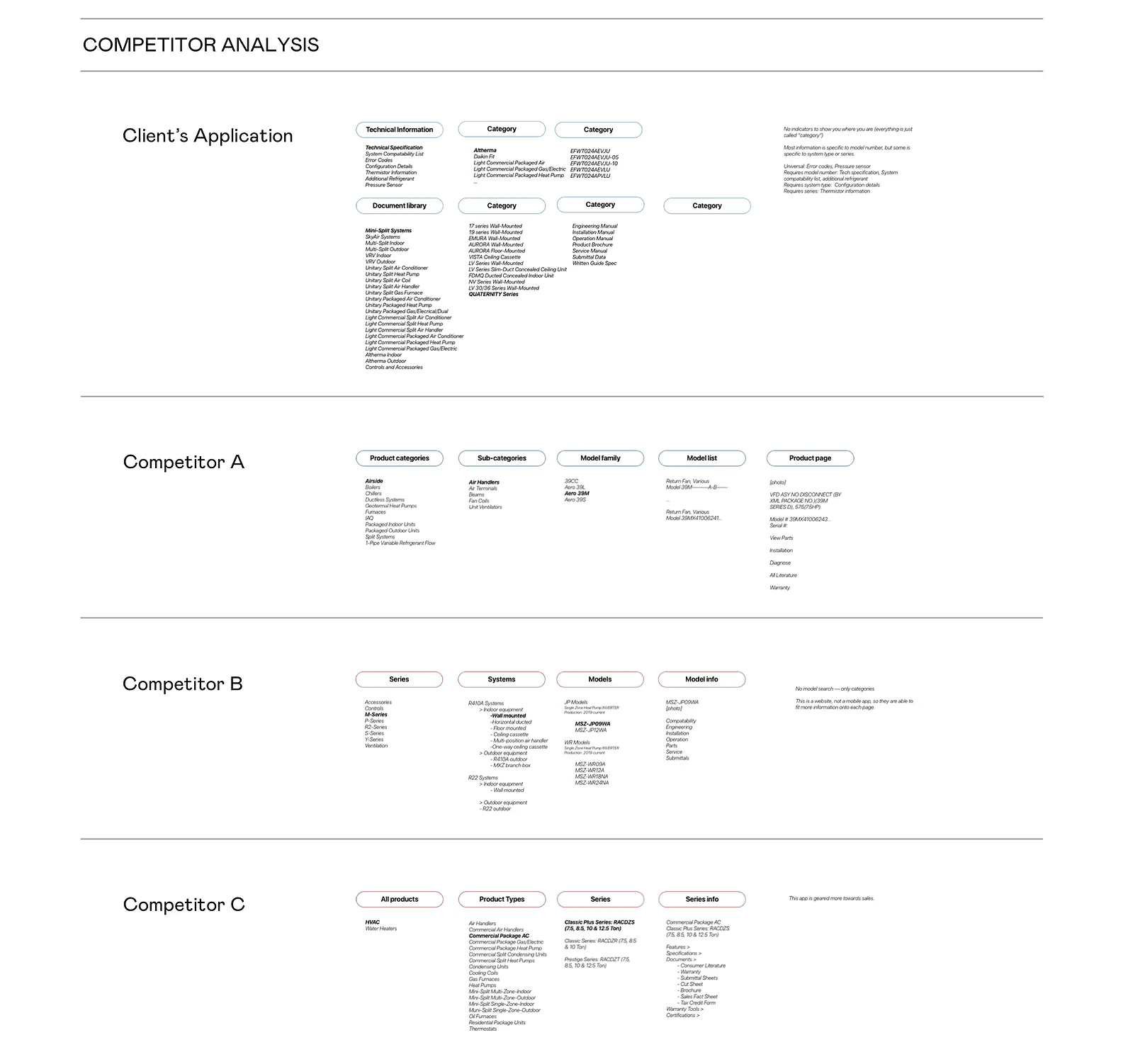
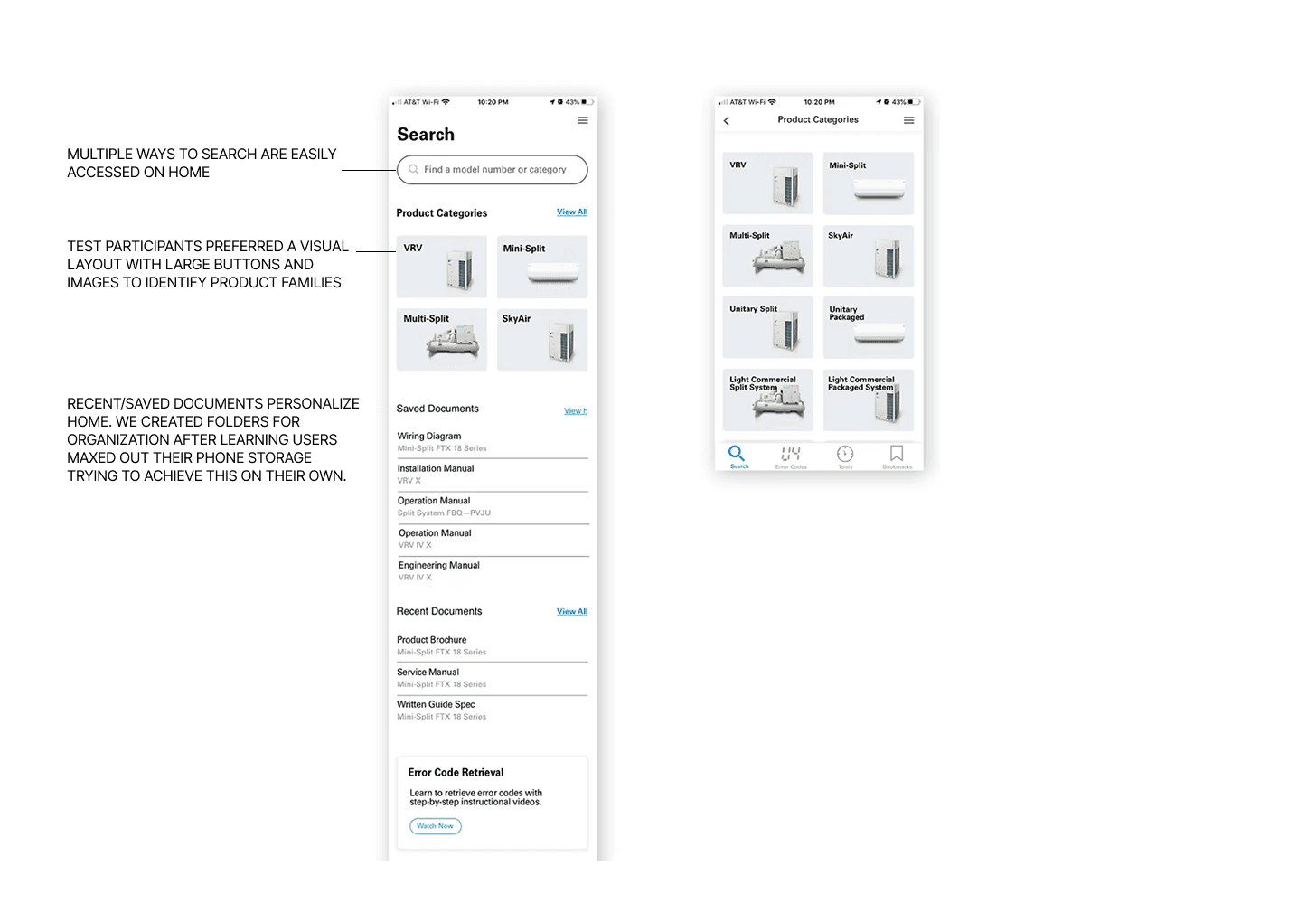
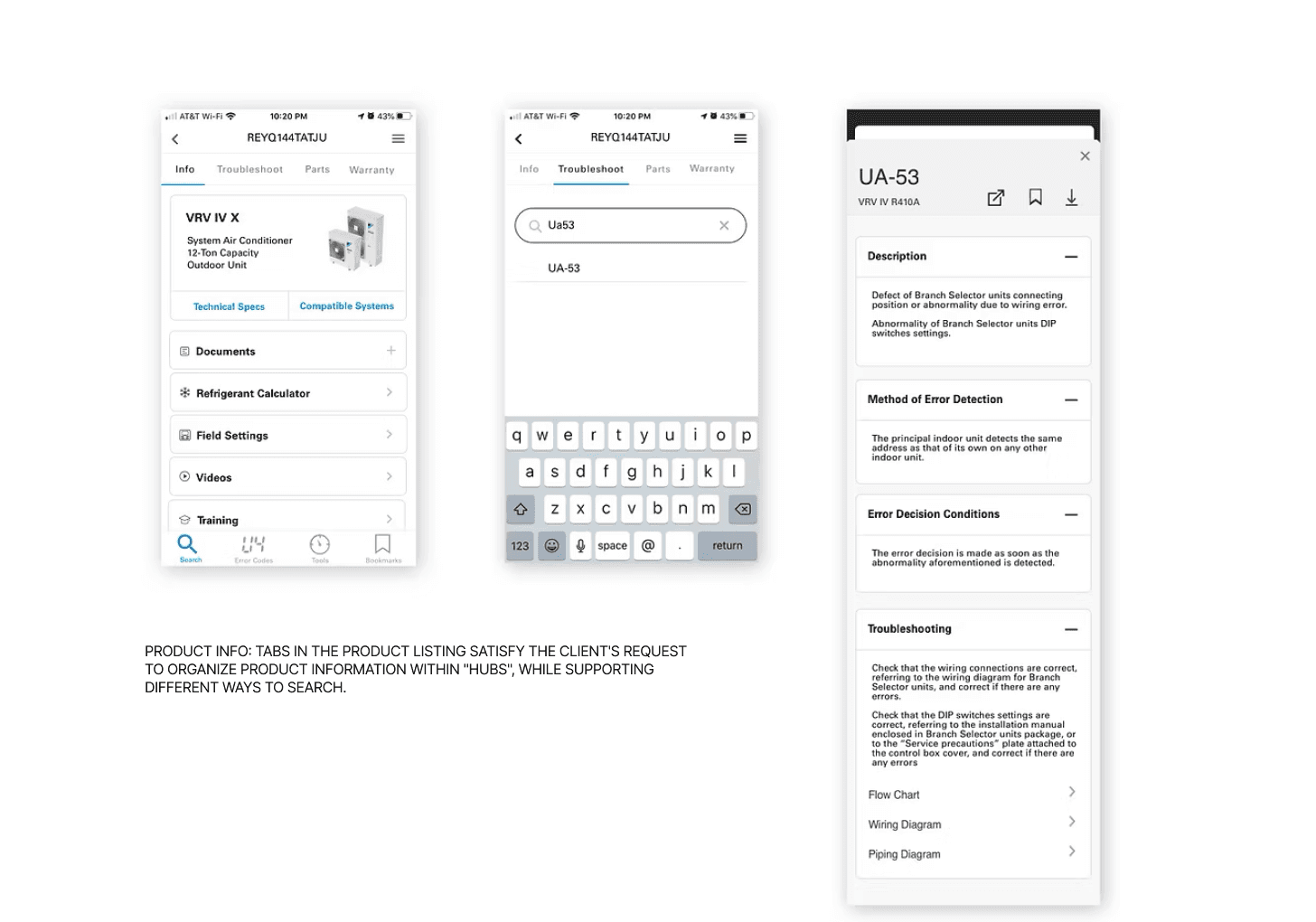
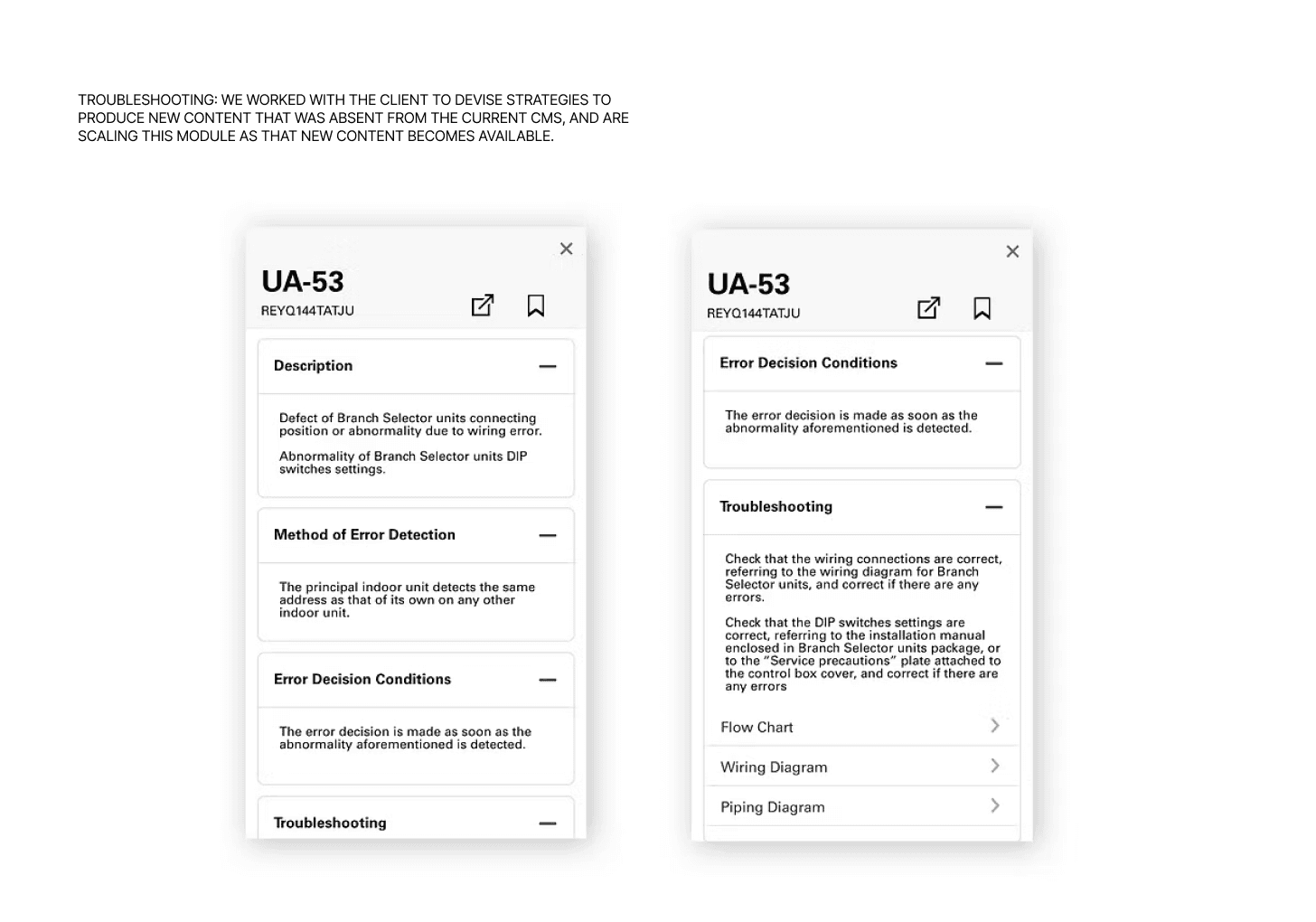
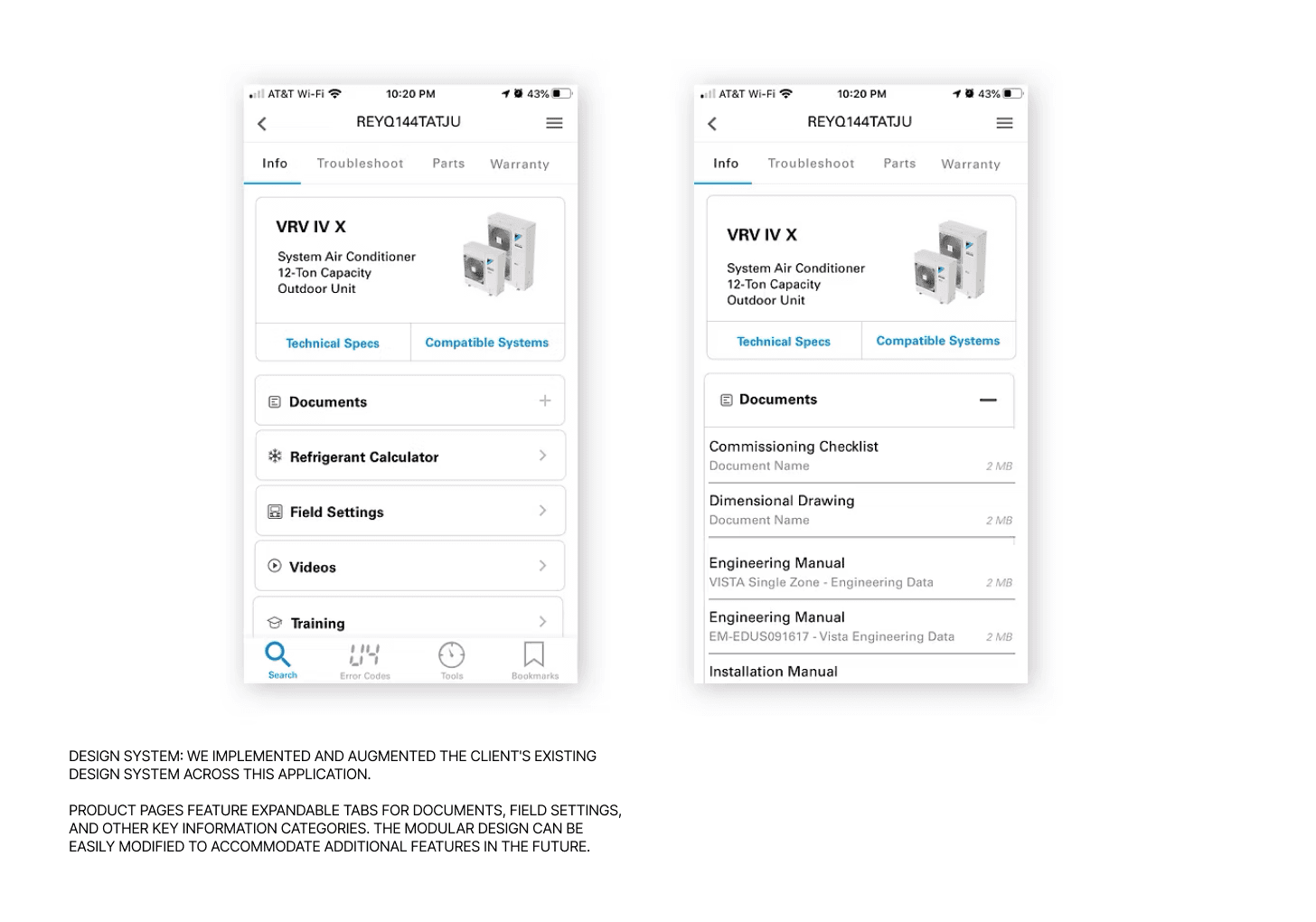
Research findings directly informed the information architecture. When technicians are on a job, their first question is which device they are working on; they want access to all relevant resources for that model in one place. At the time, Daikin’s documentation was organized by document type rather than by device, creating a mismatch between system structure and real-world workflows.
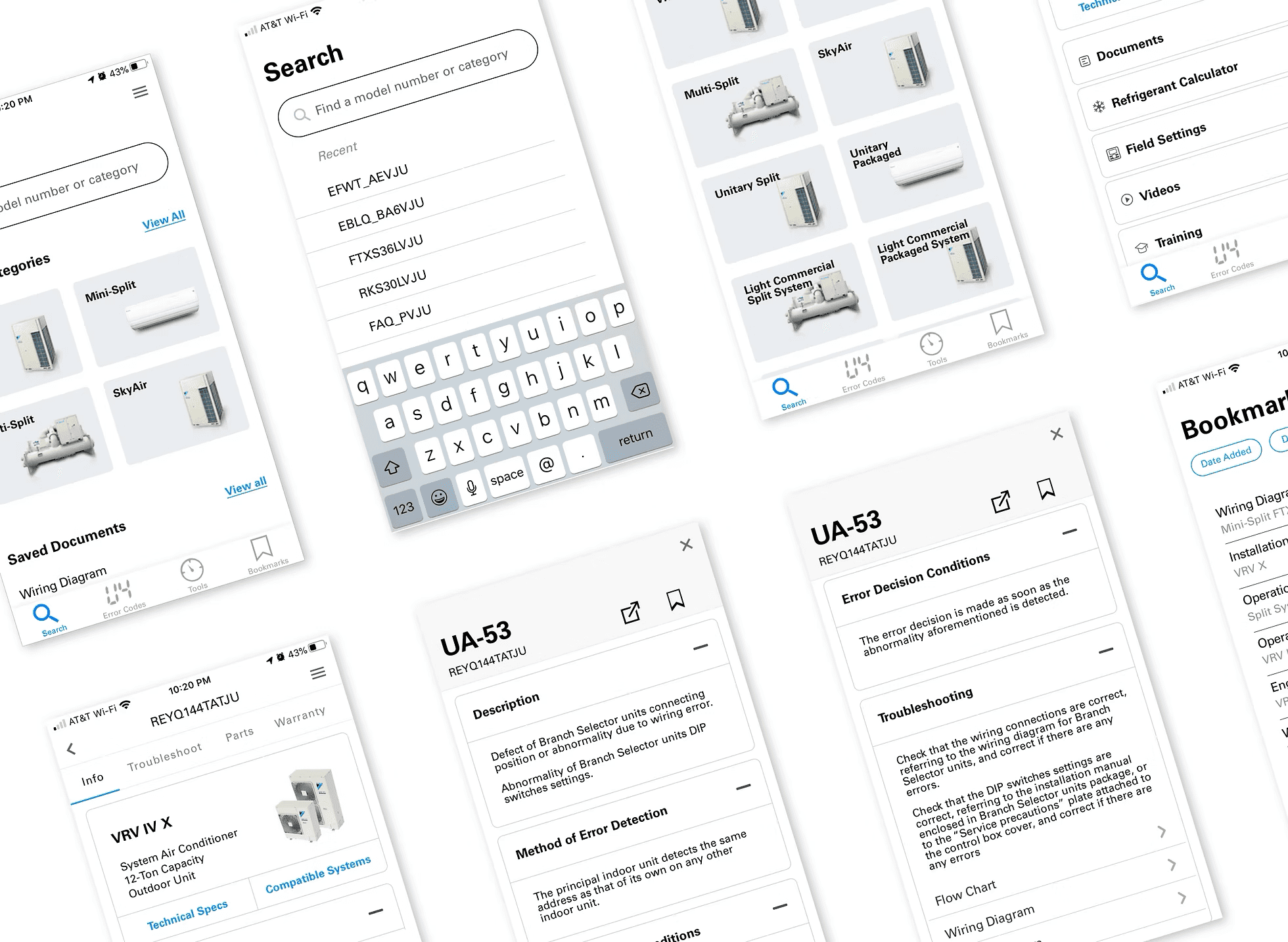
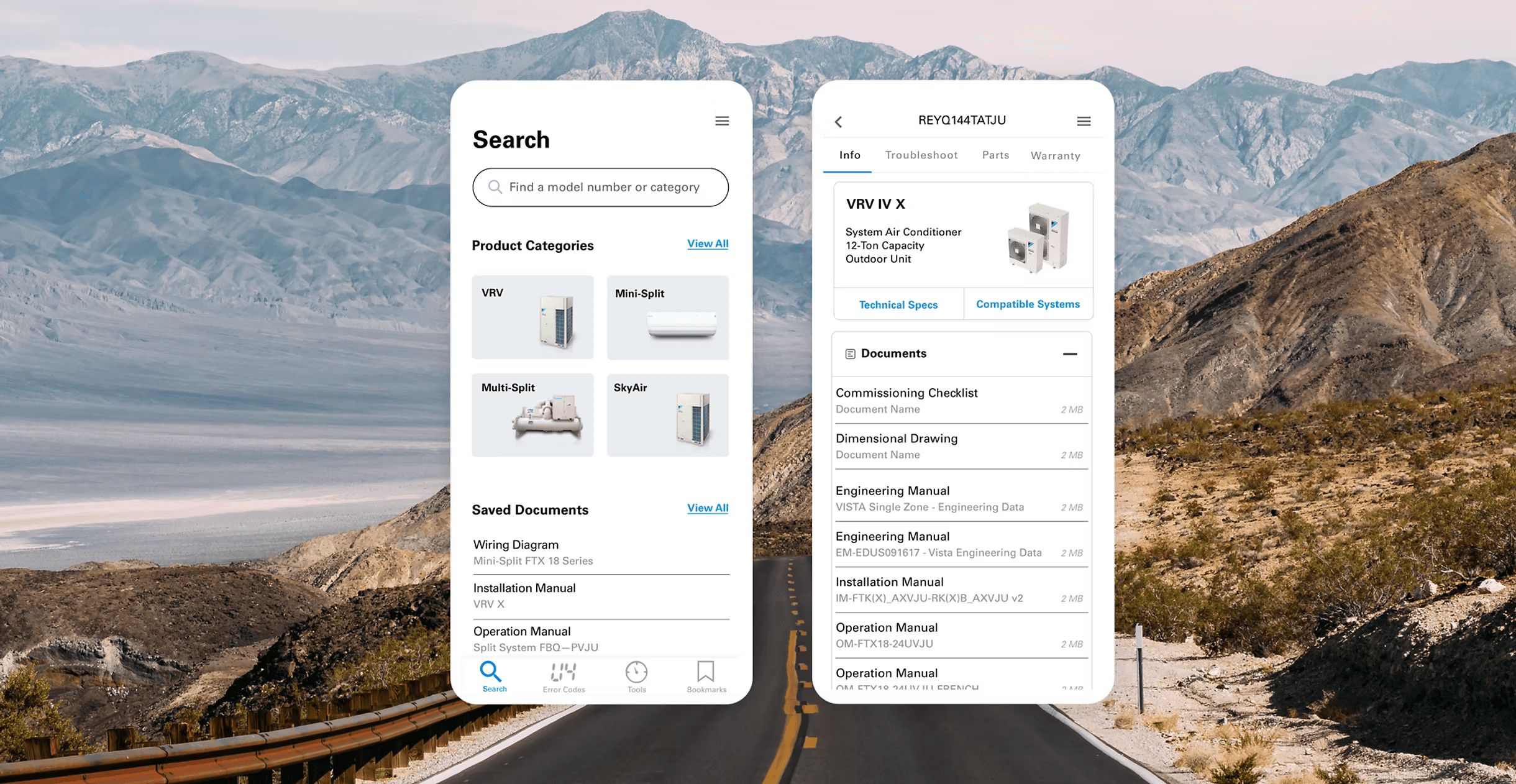
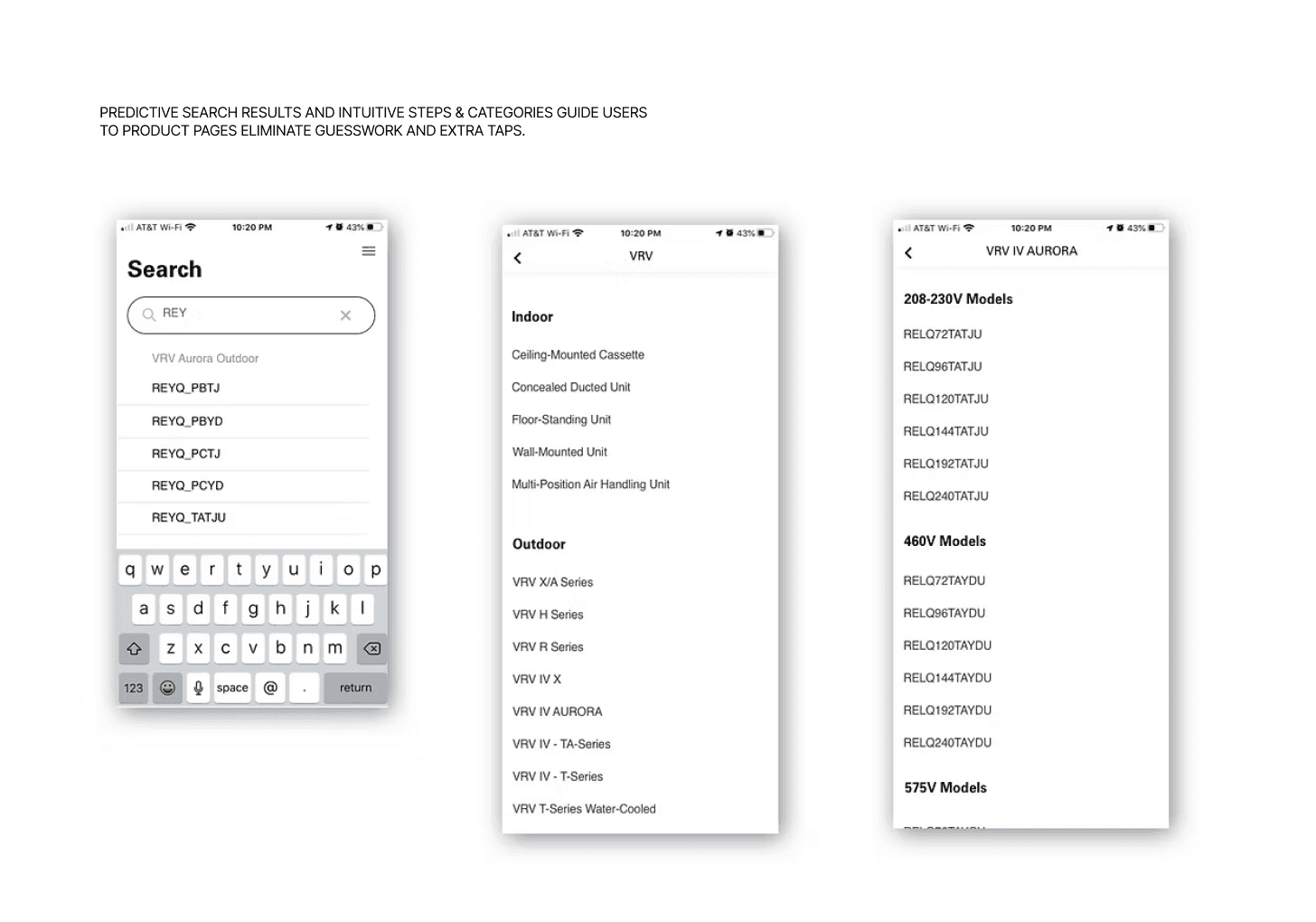
The information architecture was reorganized around equipment models, aligning navigation and interaction patterns with how technicians identified, prepared for, and executed work in the field. Offline access was treated as a core requirement, and interaction patterns were simplified to reduce cognitive load during use.
Outcome
Rather than adding new functionality, the work emphasized clarity, reliability, and trust. The resulting system aligned documentation, tooling, and context of use, improving access to information and strengthening the relationship between Daikin and the contractors who support its products.
Year
2020
Scroll down