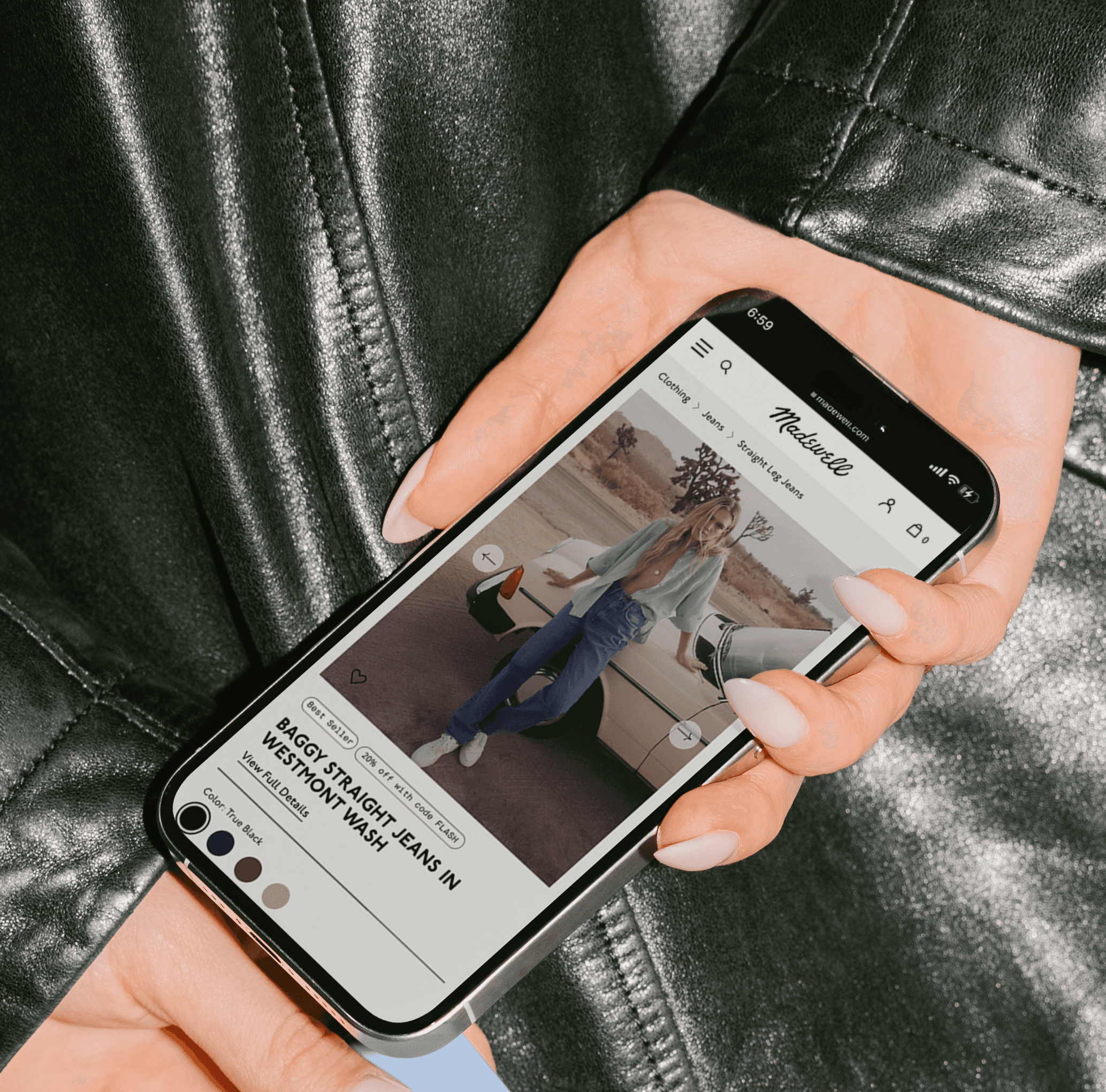
Madewell Turbo Product Page
Madewell needed a lighter-weight, faster-loading Product Detail Page to better orient new visitors arriving from paid and social channels, where attention is brief and context is limited. I led a design exploration to define how the PDP could support early understanding and continued exploration without sacrificing conversion.
Problem
The existing PDP was optimized for completion rather than discovery. Load performance was slow, particularly on mobile, and the experience was dominated by reviews, long descriptions, and variant selectors. With only a single recommendation module, shoppers who didn’t connect with the initial product were given few alternative paths forward. Many of these visitors were encountering products out of context, mid-scroll, and needed a PDP that could quickly establish relevance and invite further exploration.
Process
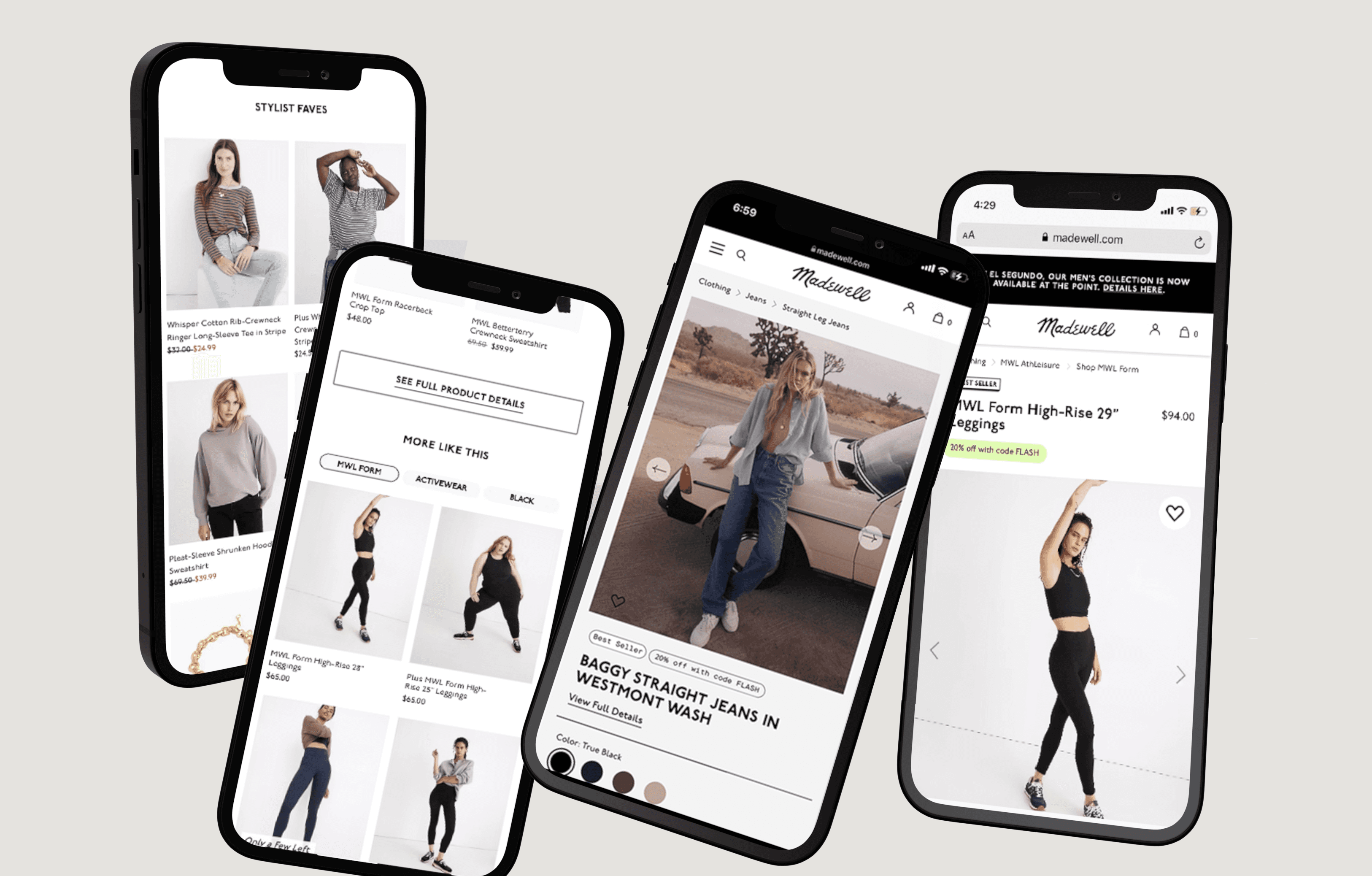
The work focused on three system-level shifts: prioritizing performance through faster first paint and reduced blocking content; treating exploration as a first-class behavior rather than a secondary outcome; and moving from fixed templates to a modular structure that could adapt by product type without repeated redesign or engineering effort.
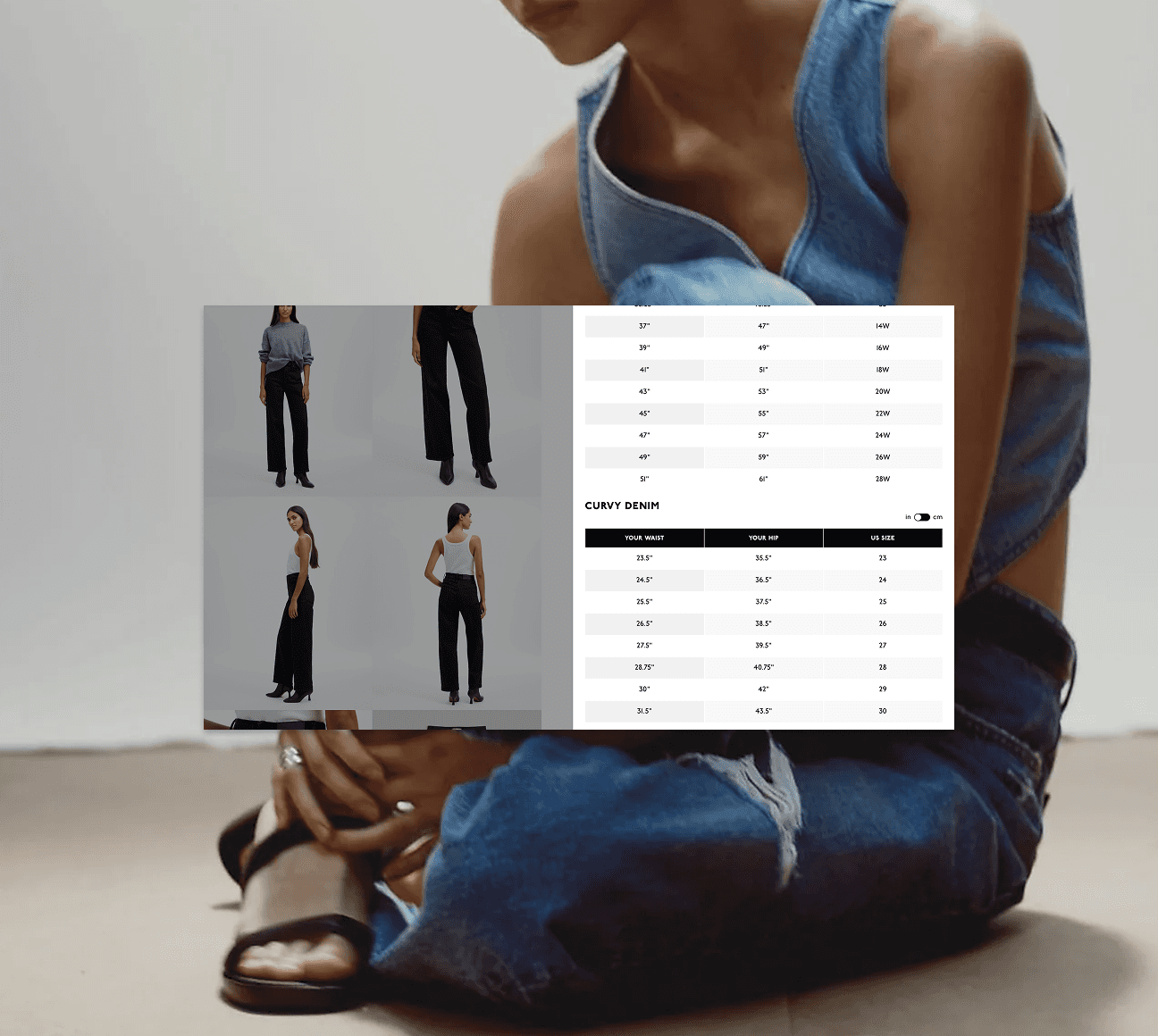
Rather than redesigning a single page, I defined a PDP framework composed of reusable content blocks—imagery, fit context, social proof, and recommendations—with flexible placement rules and clear performance guardrails. Transactional essentials were deliberately separated from exploratory content, allowing the experience to scale while remaining legible and performant.
Impact
The resulting system reframed the PDP as a surface for orientation and momentum. Visual context was introduced earlier, multiple discovery paths were available within the page, and perceived performance improved through content prioritization. The framework established a durable foundation for ongoing PDP evolution as platform capabilities matured.
Role
Solo UX designer [on a team with 3 developers]
Year
2021-2022
Scroll down